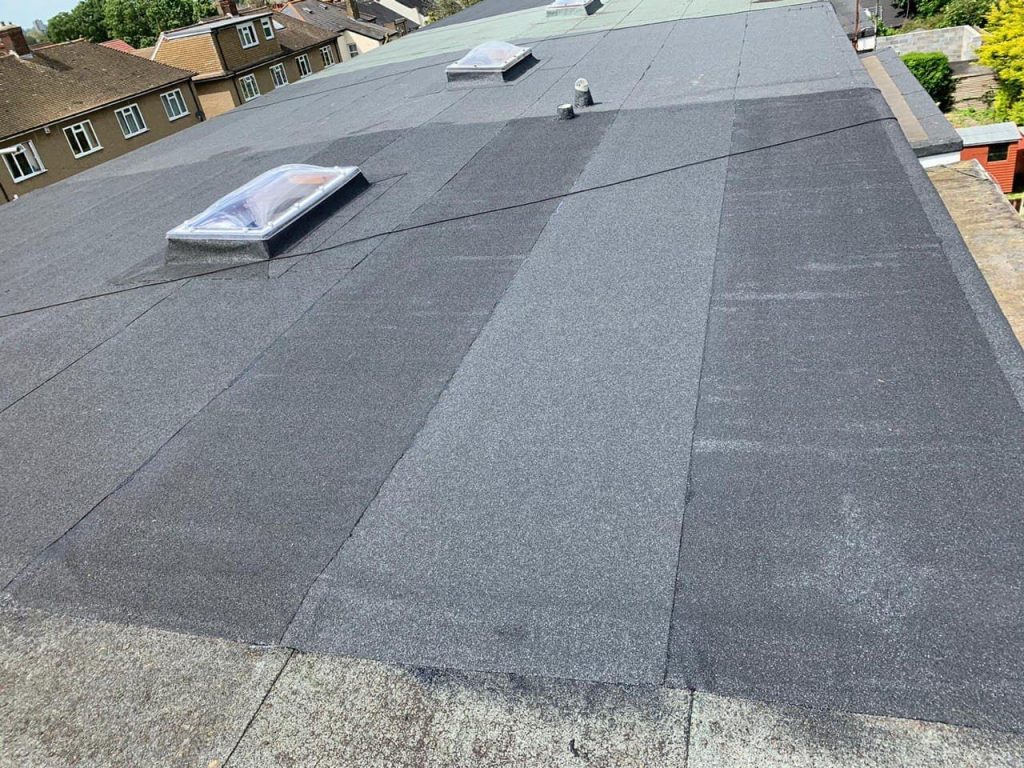
A roof does not need to be leaking heavily before homeowners begin questioning its condition. Sometimes the first indication is simply that it looks tired. Tiles may appear weathered, previous repairs may be increasingly noticeable, leadwork may be deteriorating, or minor defects may seem to appear more frequently than they once did.
For homeowners in Maidstone, Kent, the difficult question is often whether continued maintenance remains sensible or whether the roof has reached the stage where replacement should be considered. There is no single answer based purely on appearance or age. The decision should be based on the condition of the complete roofing system, the extent of deterioration and whether repairs are still addressing isolated problems effectively.
A Tired-Looking Roof Does Not Automatically Need Replacing
Roofing materials naturally change in appearance as they are exposed to years of rain, wind, temperature changes and general weathering.
Discolouration or an aged appearance does not necessarily mean the roof has stopped performing properly.
If the roof remains fundamentally sound and only has occasional localised defects, professional maintenance and targeted repairs may continue to be entirely appropriate.
The important distinction is between a roof that simply looks old and one where deterioration is beginning to affect its overall performance.
When Does Routine Maintenance Still Make Sense?
Maintenance and localised repairs are particularly useful when problems remain confined to specific areas.
Examples might include:
- An isolated slipped or broken tile
- A small section of deteriorated leadwork
- Localised ridge problems
- A clearly identifiable leak
- Minor damage following difficult weather
- One vulnerable roof junction requiring attention
Where the surrounding roof remains in serviceable condition, repairing these defects can restore weather protection without disturbing roofing materials that are still performing correctly.
A professional inspection can help establish whether the visible problem really is isolated.
Frequent Repairs Can Tell You Something Important
The occasional roof repair is not necessarily a concern. Roofs are exposed to the weather continuously, and individual components can require attention over time.
The situation becomes different when repairs start happening regularly.
One month it might be a slipped tile. Later, leadwork develops a problem. Another leak then appears somewhere else, followed by further deterioration in another section.
When defects are occurring across multiple parts of the roof, the issue may no longer be one isolated weakness.
The pattern itself becomes important.
Increasing repair frequency can indicate that several components are reaching a similar stage of deterioration.
Multiple Previous Repairs Can Make Replacement Worth Considering
A roof containing previous repairs is not automatically unsuitable. Professionally completed repairs can remain effective for many years.
However, a roof that has accumulated numerous repaired sections deserves to be assessed as a complete system.
Questions worth considering include:
- Are new defects appearing beside previous repairs?
- Are repairs now required in several different areas?
- Is the original roof covering generally deteriorating?
- Are multiple junctions beginning to require attention?
- Do leaks keep returning despite previous work?
If the majority of the roof remains sound, further maintenance may still make sense. If problems are becoming widespread, replacement can provide a more comprehensive solution.
Repeated Roof Leaks Deserve Proper Investigation
A recurring leak does not necessarily mean that the entire roof requires replacing.
Water can travel beneath roof coverings before becoming visible internally, making the true entry point difficult to identify. A persistent leak could therefore result from one unresolved defect.
However, repeated leaks in different areas are more significant.
If water ingress is developing across several sections, this can indicate deterioration affecting the wider roof rather than one troublesome junction.
Before deciding between another repair and replacement, the cause and extent of the water ingress should be properly established.
Widespread Tile Deterioration Changes the Situation
Replacing individual damaged tiles is a normal form of roof maintenance.
But what happens when tiles continue breaking, slipping or deteriorating across the roof?
At some point, repeatedly treating individual failures may stop addressing the wider condition.
This is particularly relevant when:
Several areas are affected
Damage is no longer restricted to one clearly defined section.
Neighbouring tiles are also deteriorating
A repaired tile may be surrounded by materials approaching a similar condition.
Defects return after periods of difficult weather
Repeated failures may reveal broader weaknesses.
The roof has become heavily patched
Individual repairs may be maintaining small sections while the overall covering continues to decline.
These circumstances can make replacement worth discussing.
Leadwork and Roof Junctions Matter Too
The condition of a roof cannot be judged by tiles alone.
Leadwork, valleys, ridges and other junctions all contribute to keeping rainfall outside the property.
If several of these areas are deteriorating at the same time, simply replacing occasional tiles will not address the complete situation.
Professional assessment should therefore consider the whole roof rather than focusing exclusively on the most visible materials.
This broader approach provides a much clearer picture of whether maintenance remains appropriate.
What Lies Beneath the Roof Covering?
Some of the most important parts of a roofing system cannot be seen easily from ground level.
If defects have allowed water beneath the outer covering for a prolonged period, deterioration may extend beyond the visible tiles or slates.
This does not mean hidden damage should automatically be assumed. It means that persistent or widespread problems deserve proper investigation.
A roof replacement decision should be based on evidence about the condition of the roof rather than simply how old or unattractive it appears.
Age Is Relevant, but Condition Matters More
Homeowners often ask whether a roof is simply “too old” to repair.
Age is useful context, but it should not make the decision by itself.
Two roofs of a similar age can be in very different condition depending on their materials, construction, previous maintenance and exposure.
An older roof with largely serviceable materials and one isolated defect may still respond well to repair.
Another roof may have widespread deterioration affecting multiple components.
The second situation is more likely to justify considering replacement, regardless of the number of years involved.
When Can Continuing With Repairs Become Counterproductive?
Repairs are intended to preserve serviceable roofing and correct individual defects.
They become less effective as an overall strategy when the roof continually develops unrelated problems across different areas.
Warning signs can include:
- Increasingly frequent repairs
- Persistent or recurring water ingress
- Numerous slipped, cracked or damaged tiles
- Deterioration affecting several roof junctions
- Large numbers of previous repair areas
- Different sections failing one after another
- General deterioration across much of the covering
At this point, it is sensible to compare the condition of the whole roof with the limited areas that remain unaffected.
What Does Roof Replacement Actually Achieve?
Replacing a roof is not simply about improving its appearance.
Where widespread deterioration has developed, replacement allows the roofing system to be addressed comprehensively rather than continuing to work around numerous individual weaknesses.
The existing roof covering can be removed as required, underlying areas can be assessed and the new roofing system can be constructed as a coordinated installation.
This can be particularly valuable when the existing roof has become a collection of ageing materials and repeated repairs.
The objective is to establish a consistent roofing system rather than continuing to respond to defects individually.
Replacement Can Also Improve the Appearance of a Tired Roof
Although condition should be the main consideration, appearance is still relevant.
A heavily weathered roof containing numerous repairs can make the exterior of a property appear tired even when each repair has been completed correctly.
A new roof provides an opportunity to create a more consistent finish across the complete property.
However, appearance alone should not be used to justify unnecessary replacement. If an existing roof remains sound, maintenance may continue to be the more appropriate roofing solution.
Repair or Replace? Look at the Pattern, Not Just the Latest Defect
One of the best ways to approach the decision is to stop looking at each repair in isolation.
Consider what has happened over a longer period.
If one tile has broken after years without problems, replacement of that tile may be all the roof requires.
If tiles, leadwork, junctions and other components have all needed repeated attention, the complete picture is different.
The history of the roof can provide valuable information about whether deterioration remains localised or has become widespread.
Why a Professional Roof Inspection Is Important
Deciding whether to maintain or replace a roof should begin with understanding its actual condition.
At Maidstone Roofers, we provide professional roofing services throughout Maidstone, Kent, including roof repairs, maintenance and roof replacement.
A proper assessment can consider:
The extent of visible deterioration
Is damage concentrated in one area or distributed across the roof?
The condition of surrounding materials
Are neighbouring tiles and components still serviceable?
Previous repair areas
Are they performing correctly, or are problems developing around them?
Roof junctions and leadwork
Are these isolated defects or part of wider deterioration?
The pattern of recent problems
Has the roof begun requiring substantially more attention?
These factors help determine whether another focused repair is appropriate or whether a more comprehensive roofing solution should be considered.
Do Not Wait Until the Roof Completely Fails
Replacement does not need to be delayed until a roof develops severe problems throughout.
If deterioration is clearly becoming widespread, assessing the roof earlier provides an opportunity to make a considered decision rather than reacting to repeated leaks or sudden failures.
Equally, homeowners should not assume that every ageing roof needs replacing immediately.
The aim is to intervene at the appropriate stage.
Good roofing advice should distinguish between a serviceable roof that needs maintenance and one where continued patch repairs are no longer addressing its overall condition.
Maintaining a Roof That Still Has Useful Life
Where inspection shows that the roof remains fundamentally sound, sensible maintenance can help keep it performing effectively.
This may involve dealing promptly with isolated defects rather than allowing them to affect surrounding materials.
Keeping an eye on visible changes can also be useful, particularly after periods of strong wind or heavy rainfall.
Changes worth investigating include new slipped tiles, deteriorating leadwork, recurring damp patches or sections that have noticeably changed since the last inspection.
Early attention gives localised repairs the best opportunity to remain localised.
Roof Replacement in Maidstone
For homeowners in Maidstone, deciding between continued roof maintenance and replacement should be based on the condition of the property rather than assumptions about age alone.
At Maidstone Roofers, our approach is to assess what the roof genuinely requires. Where targeted repairs remain appropriate, sound sections of roofing should not need unnecessary replacement. Where deterioration has become extensive and multiple areas are repeatedly requiring attention, a new roof may provide a more suitable long-term solution.
Understanding the underlying condition first allows the roofing work to be matched properly to the problem.
Conclusion
A tired-looking roof does not automatically need replacing. Weathering, discolouration and occasional local defects can often be managed through appropriate maintenance and professional repairs when the wider roofing system remains sound.
Replacement becomes more relevant when the pattern changes. Frequent repairs, recurring leaks, widespread tile deterioration, failing leadwork and multiple problem areas can indicate that the roof is declining as a complete system rather than experiencing isolated faults.
For homeowners in Maidstone, Kent, Maidstone Roofers provides professional roof repairs, maintenance and roof replacement services. If your roof is looking tired or has started requiring attention more frequently, contact us to arrange an assessment and determine whether continued maintenance or a more comprehensive roofing solution is the appropriate next step.
Call us on: 01622 232793
Click here to find out more about Maidstone Roofers
Click here to complete our contact form and see how we can help with your roofing needs.